

How to Set Up a Secure Crypto Wallet for Daily Transactions in 2026
Establishing a secure cryptocurrency wallet is no longer just for long-term holders. With the average daily transaction volume for Bitcoin exceeding $10 billion globally, the need for accessible, secure, and fast payment methods has never been greater. Setting up a wallet for daily use requires balancing convenience with rigorous security protocols to protect your assets from phishing and unauthorized access.
Understanding Wallet Types for Daily Use
Before diving into the technical setup, it is crucial to understand the architecture of digital wallets. A crypto wallet does not store coins like a physical wallet stores cash. Instead, it manages the private keys that grant access to your blockchain assets. For daily transactions, you need a solution that offers speed without compromising security.
There are two primary categories of wallets relevant to this guide. A hot wallet is a software-based solution connected to the internet, designed for frequent access and quick transactions. A cold wallet is a hardware device that keeps private keys offline, ideal for long-term storage. For daily spending, a hot wallet or a mobile app like ByteVault is the most practical choice due to its integration with point-of-sale systems and ATMs.
When selecting a wallet, consider the underlying security protocol. Many modern wallets, including those powered by ByteAuth, utilize Bitcoin's secp256k1 cryptography. This ensures that your authentication process is as robust as the network securing trillions of dollars in value. Avoid wallets that rely on traditional password-only logins, as these are vulnerable to credential stuffing attacks.
Step-by-Step Setup Process
Setting up your wallet involves a few critical steps to ensure your identity and assets are protected from day one. Follow this procedure to establish a secure foundation for your daily crypto transactions.
1. Download the Official Application
Always download wallet applications directly from the official website or verified app stores. For users in the United States, Byte Federal provides a secure ecosystem for managing digital assets. Verify the developer name and check for digital signatures to ensure the app has not been tampered with.
2. Create Your Account and Verify Identity
Regulatory compliance requires identity verification for most financial services. You will need to provide personal details and a government-issued ID. This process, known as KYC (Know Your Customer), is standard for account registration and helps prevent fraud. Ensure you are on a secure, encrypted connection during this step.
3. Secure Your Private Keys
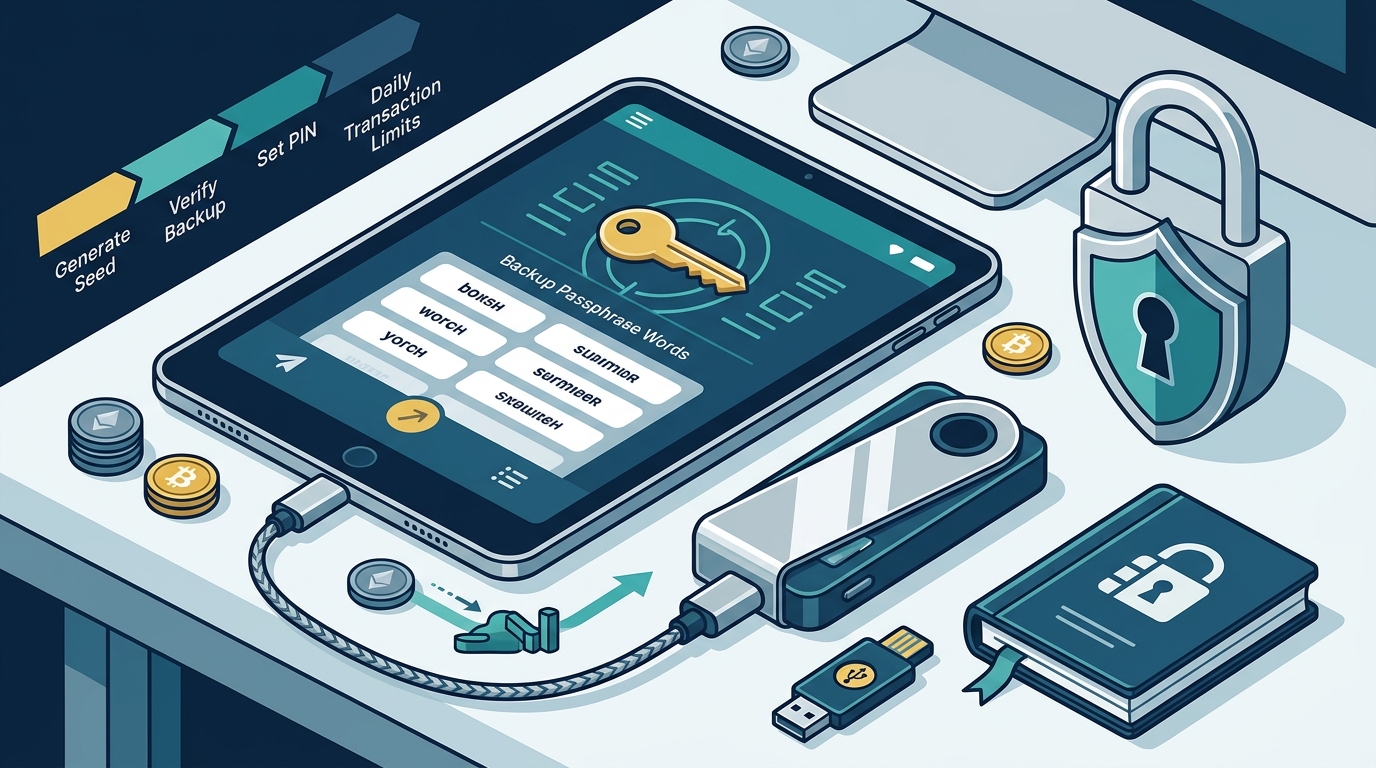
Your private keys are the master password to your crypto wealth. Never share these with anyone. If you are using a non-custodial wallet, you will be given a seed phrase. Write this down on paper and store it in a safe place. Digital storage of seed phrases is a critical security risk.
4. Enable Biometric Authentication
Modern wallets offer biometric login options such as Face ID or Touch ID. This adds a layer of security that is significantly harder to bypass than a PIN or password. By using passwordless authentication, you reduce the risk of phishing attacks targeting your login credentials.
Security Best Practices
Once your wallet is set up, maintaining its security is an ongoing responsibility. Daily transactions expose you to various threats, from skimming devices at ATMs to online phishing scams. Adopting a proactive security mindset is essential.
First, be vigilant when using Bitcoin ATMs. Always verify the screen integrity and look for signs of tampering. Byte Federal ATMs are designed with advanced security features to protect users during cash-to-crypto conversions. Second, enable two-factor authentication (2FA) wherever possible, but prefer app-based 2FA over SMS, which can be intercepted.
Regularly update your wallet software to patch any known vulnerabilities. Developers frequently release updates to address security flaws. Additionally, use a dedicated email address for your crypto accounts to isolate potential breaches from your primary personal or business communications.
Integrating Payments and POS
For those looking to accept crypto or use it for business, integrating a Point of Sale (POS) system is the next logical step. This allows you to accept payments directly from customers' wallets, reducing transaction fees and settlement times.
Platforms like Byte Federal POS offer seamless integration with major cryptocurrencies. This system supports real-time conversion to fiat, protecting you from market volatility. For merchants, this means you can offer a modern payment option without taking on the risk of holding digital assets.
Consider the user experience as well. A good POS system should generate a QR code instantly, allowing customers to pay with a single scan. This speed is crucial for retail environments where transaction time impacts customer satisfaction. The advertising capabilities of these kiosks also provide an additional revenue stream for business owners.
Key Takeaways
- Hot vs. Cold Storage: Use hot wallets for daily transactions and cold wallets for long-term savings.
- Biometric Security: Enable Face ID or Touch ID to prevent unauthorized access to your wallet.
- Seed Phrase Safety: Never digitize your seed phrase; store it physically in a secure location.
- Regulatory Compliance: Complete KYC verification to ensure your account is fully compliant and secure.
- POS Integration: Use dedicated POS systems like Byte Federal POS for seamless business transactions.
- ATM Security: Inspect Bitcoin ATMs for tampering before making transactions.
- Regular Updates: Keep your wallet software updated to protect against known vulnerabilities.
Frequently Asked Questions
Is it safe to use a crypto wallet for daily purchases?
Yes, using a secure hot wallet for daily purchases is safe as long as you follow best practices like enabling biometric authentication and keeping your software updated. The convenience of instant transactions outweighs the risks when proper security measures are in place.
How do I recover my wallet if I lose my phone?
If you have securely stored your seed phrase, you can recover your wallet on any new device by entering the seed phrase during the setup process. Never share this phrase with anyone, including support staff.
What is the difference between a Bitcoin ATM and a crypto wallet?
A Bitcoin ATM is a physical kiosk that allows you to buy or sell crypto using cash. A crypto wallet is a digital tool that stores your private keys and manages your assets. They are complementary tools in the crypto ecosystem.
Can I use my crypto wallet for business payments?
Absolutely. Many businesses use Point of Sale systems integrated with crypto wallets to accept payments. This reduces fees and offers customers a modern payment option.
How does ByteAuth improve security?
ByteAuth uses passwordless authentication powered by Bitcoin cryptography. This eliminates the risk of password theft and phishing, providing a more secure and faster login experience for users.
Are there fees for using a crypto wallet?
Most wallets do not charge fees for holding assets, but transactions on the blockchain require network fees. Some platforms may charge additional fees for converting crypto to fiat or using certain services.
What regions does Byte Federal serve?
Byte Federal operates primarily in the United States, with a growing presence in other regions. Check the locations page for the most up-to-date information on service areas.
Start Your Secure Crypto Journey Today
Setting up a secure crypto wallet is the first step toward financial sovereignty. By following the steps outlined in this guide and utilizing trusted platforms like Byte Federal, you can enjoy the benefits of digital currency with peace of mind. Visit our registration page to get started and experience the future of finance.