
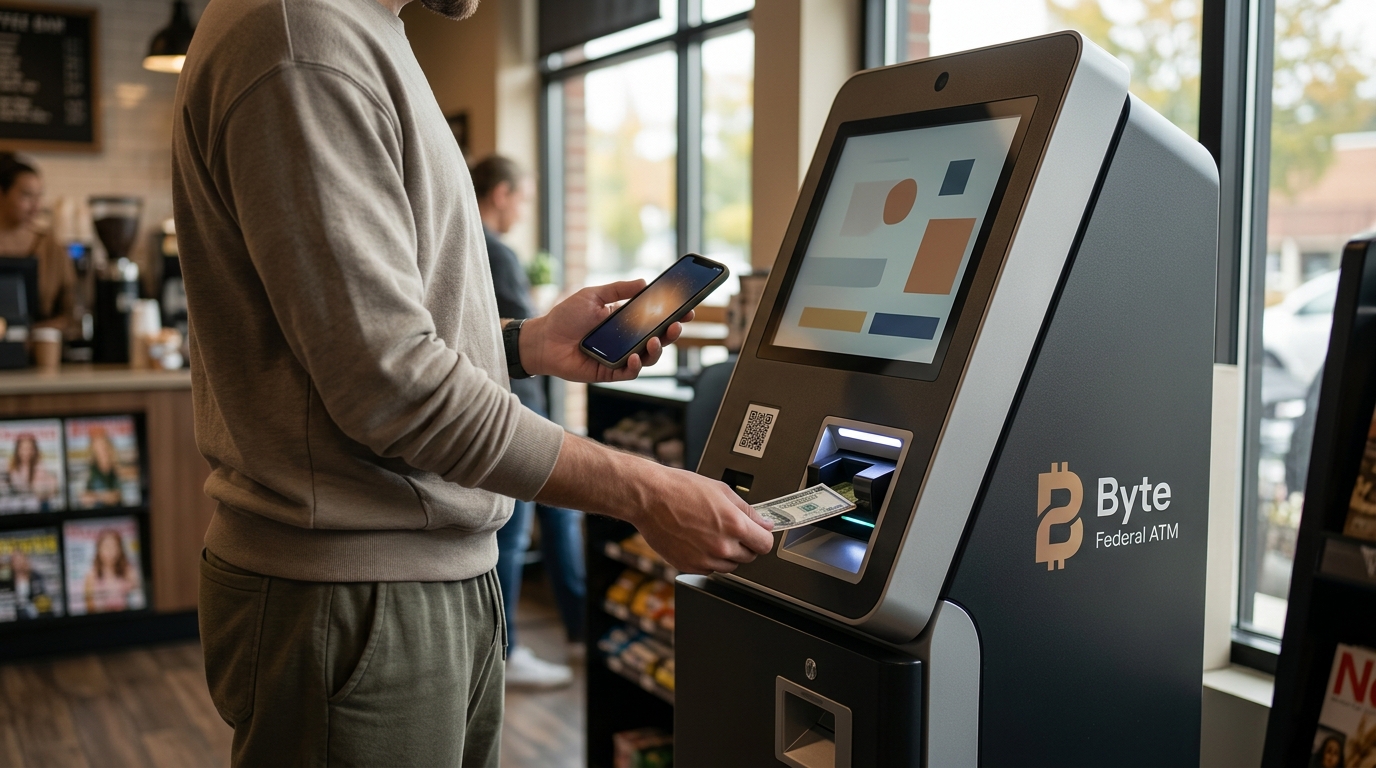
Buying Bitcoin with Cash: No Bank Account Required
Byte Federal lets you buy Bitcoin with cash without needing a bank account. Our network of 1,350+ kiosks across 42+ U.S. states accepts physical bills and sends them directly to your digital wallet. This guide covers the specific bank account requirements for crypto kiosks, compares major operators, and explains how to complete your first cash-to-crypto transaction safely and quickly.
Bank Account Requirements for Bitcoin ATMs
Traditional online exchanges often require you to link a bank account, complete lengthy identity verification, and wait for ACH transfers to clear. This process can take days and excludes individuals who are unbanked or underbanked. A Bitcoin ATM, also known as a BTM, is a physical kiosk that converts cash into cryptocurrency and sends it to your digital wallet. This hardware-based approach removes the need for traditional banking rails entirely.
Why Cash is the Primary Method
Using cash is the most direct bridge from fiat currency to digital assets. When you insert bills into a kiosk, the machine validates the currency and immediately credits your wallet address. There is no waiting for bank transfers and no confusing trading charts. This simplicity makes Bitcoin ATMs the most familiar entry point for new users. If you can use a traditional bank ATM, you can use a crypto kiosk.
Identity Verification vs. Bank Links
While you do not need a bank account, you do need to verify your identity. Regulatory compliance requires operators to perform Know Your Customer (KYC) checks. This typically involves scanning a government-issued photo ID, such as a driver's license or passport, and taking a selfie. Byte Federal operates as a FinCEN-registered Money Services Business, ensuring that all identity checks meet federal standards. This process protects the network from fraud while keeping the transaction fast and accessible.
Top Bitcoin ATM Operators Compared
The U.S. market features several major operators, each with different coverage, supported assets, and fee structures. Choosing the right operator depends on your location, the specific cryptocurrency you want to buy, and your preferred wallet. Below is a comparison of leading networks to help you find the best option near you.
| Operator | Network Size | Key Features | Bank Account Needed |
|---|---|---|---|
| Byte Federal | 1,350+ ATMs in 42+ states | Lightning Network support, in-house hardware, 24/7 support | No |
| CoinFlip | 1,000+ ATMs | Wide asset support, card and cash options | No |
| CoinMe | 500+ ATMs | Focus on Bitcoin, simple interface | No |
| BitStop | 300+ ATMs | Multi-currency support, mobile app integration | No |
Byte Federal stands out for its vertical integration. We build our own kiosks, run our own software, and manage our own compliance program. This means you have one accountable point of contact for support. Our network is the first in the U.S. to enable Lightning Network deposits and withdrawals across the entire fleet, offering faster and cheaper transactions for users.
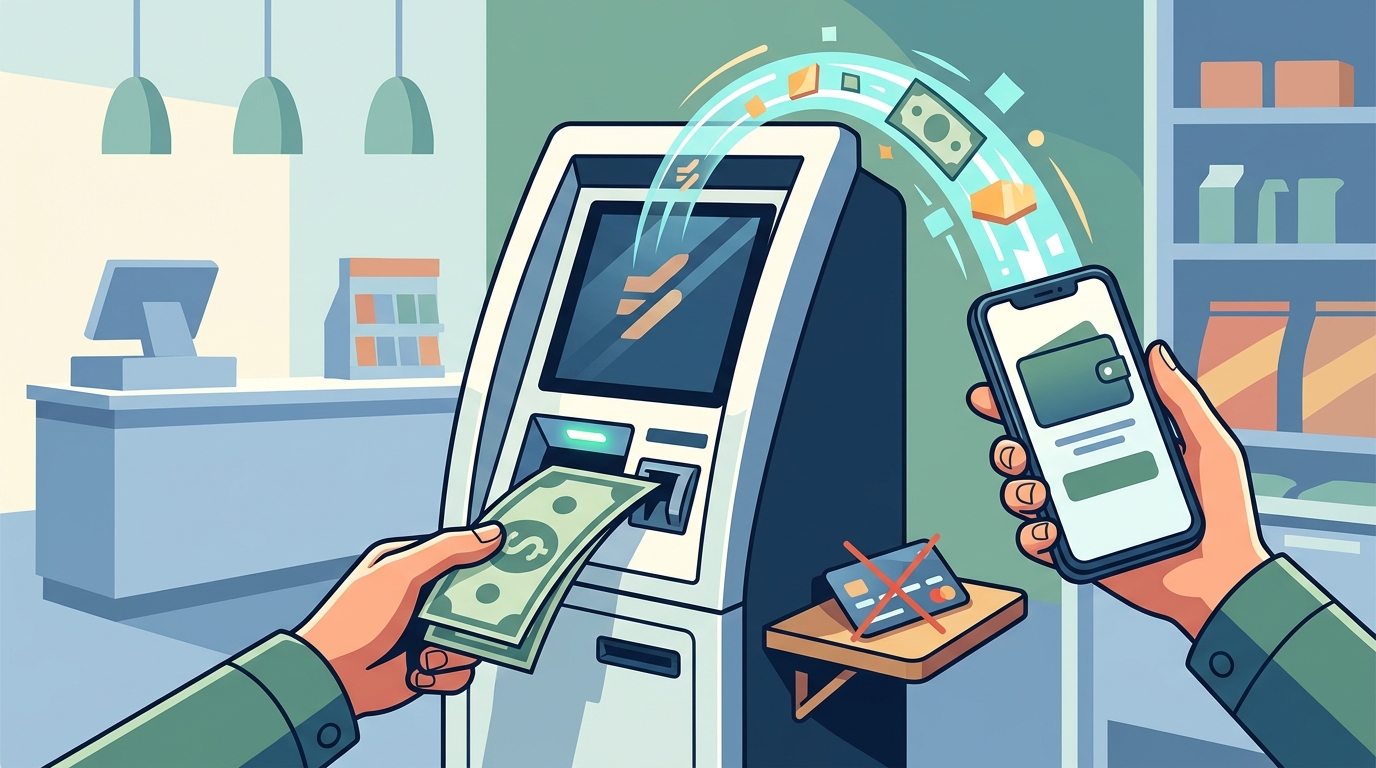
Why Vertical Integration Matters
Many operators rely on third-party hardware and software, which can lead to inconsistent user experiences and slower support times. By controlling the entire stack, Byte Federal ensures that every kiosk in our network performs to the same high standard. This reliability is critical for users who rely on these machines for their primary access to digital assets.
How to Use a Bitcoin ATM Step-by-Step
Using a Bitcoin ATM is a straightforward process that takes only a few minutes. The kiosk guides you through each screen, but it helps to be prepared before you arrive. You will need cash, a mobile phone, a government-issued photo ID, and a Bitcoin wallet with a public receiving QR code.
Step 1: Find a Nearby ATM
Search by city, ZIP code, or address to locate the nearest machine. Review the location hours and available services before traveling. Business hours can vary, so checking the location details ensures you do not make a wasted trip. You can use the ATM locator to find a machine near you.
Step 2: Verify Your Identity
Enter your phone number and follow the prompts to receive a security code. If you are a first-time user, you will need to scan your ID and take a picture for a compliance check. This step ensures that the person using the machine is who they say they are.
Step 3: Scan Your Wallet and Insert Cash
Open the Receive screen in your wallet and scan its public address at the kiosk. Choose the amount you wish to buy and insert bills one at a time. The kiosk will update your total as you insert cash. Ensure you are satisfied with the exchange rate before proceeding.
Step 4: Review and Confirm
Check the rate, fees, wallet address, and amount of cryptocurrency you will receive. Once you are confident in the details, press Done to complete the transaction. Your Bitcoin will be sent to your wallet immediately.
Choosing the Right Bitcoin Wallet
You need a place to receive your Bitcoin before you visit the ATM. A Bitcoin wallet is a digital tool that stores your private keys, allowing you to securely send, receive, and manage your Bitcoin. There are two main types of wallets: custodial and non-custodial. Choosing the right one depends on your comfort level with security and your desire for control.
Custodial Wallets for Simplicity
A custodial wallet is managed by a third-party service that holds your keys on your behalf. This is the easiest option for beginners because the provider handles security and recovery. ByteWallet is a great example of a custodial wallet. It is designed for speed and accessibility, allowing you to buy and send Bitcoin from your phone with minimal setup.
Non-Custodial Wallets for Sovereignty
A non-custodial wallet gives you full control over your private keys. You are solely responsible for securing and backing up your keys, but you also have 100% ownership of your assets. ByteVault is a non-custodial mobile wallet that supports the Lightning Network for faster transactions. It is ideal for users who want total control and privacy.
Security, Fraud Prevention, and Compliance
Security is the top priority for any Bitcoin ATM operator. Scammers often target users by directing them to send cryptocurrency to third parties. It is crucial to understand that Bitcoin ATMs are only used to purchase Bitcoin for your own wallet. Sending Bitcoin to a third party violates terms and conditions and can lead to account deactivation.
Protecting Yourself from Scams
Almost all consumer fraud starts with contact from a stranger. If someone tells you to use a kiosk to pay a bill, fine, investment, or emergency request, stop. Do not continue the transaction. Use the ATM only to send cryptocurrency to a wallet you own. Learn how to spot a scam by reviewing our fraud prevention guide.
Regulatory Compliance
Byte Federal is registered with FinCEN and adheres to strict Anti-Money Laundering (AML) programs. This ensures that our network is safe and compliant with U.S. laws. We also operate a security bug bounty program to encourage responsible disclosure of vulnerabilities. This proactive approach helps us maintain a secure environment for all users.
Key Takeaways
- You do not need a bank account to buy Bitcoin at a kiosk; cash is the primary payment method.
- Identity verification is required for compliance, but it does not involve linking a bank account.
- Byte Federal operates 1,350+ ATMs across 42+ U.S. states, offering wide coverage.
- Vertical integration ensures consistent hardware, software, and support across the network.
- Lightning Network support enables faster and cheaper transactions on Byte Federal kiosks.
- Choose between custodial wallets like ByteWallet for simplicity or non-custodial wallets like ByteVault for control.
- Never send Bitcoin to a third party at an ATM; only use it for your own wallet.
- Review the exchange rate and fees on the kiosk screen before confirming your transaction.
Frequently Asked Questions
Do I need a bank account to use a Bitcoin ATM?
No, you do not need a bank account, credit card, or debit card to buy crypto at our machines. You only need cash, a mobile phone, a photo ID, and a digital wallet.
What identification is required?
You need a valid government-issued photo ID, such as a driver's license or passport. You will also need to provide your phone number for a security code.
How long does the transaction take?
The transaction itself is immediate. However, processing times for Bitcoin ATM transactions can vary, often taking around ten minutes to appear in your wallet.
Can I sell Bitcoin for cash?
Some machines allow you to sell cryptocurrency for cash, but support varies by operator and location. Byte Federal kiosks are primarily designed for buying with cash.
What fees are associated with buying Bitcoin?
Fees vary by region and Bitcoin rate source. The kiosk displays a rate that includes all fees before you confirm the transaction. Always review the rate before proceeding.
Is it safe to use a Bitcoin ATM?
Yes, when used correctly. Byte Federal is FinCEN-registered and follows strict security protocols. The main risk is user error or falling for scams, so always send Bitcoin only to your own wallet.
Which wallet should I use?
If you are a beginner, a custodial wallet like ByteWallet is easiest. If you want full control, a non-custodial wallet like ByteVault is recommended.
Conclusion
Buying Bitcoin with cash is a simple, accessible, and secure process that does not require a bank account. By using a reputable operator like Byte Federal, you can bypass traditional banking hurdles and gain direct access to digital assets. Our network of 1,350+ kiosks across 42+ states ensures that you can find a machine near you. Whether you choose the simplicity of ByteWallet or the sovereignty of ByteVault, you have the tools to manage your Bitcoin securely. To get started, find your nearest Bitcoin ATM and complete your first purchase today.