

The global cryptocurrency market has experienced exponential growth, with total market capitalization frequently surpassing $2 trillion. According to recent industry reports, over 420 million people worldwide now own some form of digital asset. This massive adoption has made security paramount. Storing these assets offline, often referred to as cold storage, is the most effective way to protect wealth from cyber threats. This guide details the methods, hardware, and best practices for securing your digital holdings.
What is Cold Storage?
Cold storage is the practice of keeping cryptocurrency private keys offline. Cold storage is the method of storing cryptographic keys in a secure environment that is not connected to the internet. This isolation prevents hackers from accessing your funds through remote attacks, malware, or phishing schemes. While hot wallets are convenient for daily transactions, they remain vulnerable because they are always connected to a network. For long-term holding, cold storage is the industry standard for security.
The concept relies on the principle that if a device never connects to the internet, it cannot be hacked remotely. This is particularly important for high-value holdings. According to cybersecurity data, the vast majority of major crypto exchanges and wallet breaches involve hot wallets or compromised private keys stored on connected devices. By moving assets to an offline environment, you eliminate the attack surface entirely.
Hardware Wallets Explained
Hardware wallets are specialized physical devices designed to store private keys. They are the most popular form of cold storage for individual investors. These devices look like USB drives or small calculators and allow you to sign transactions offline. When you need to send crypto, you connect the device to a computer or phone, confirm the transaction on the device screen, and it broadcasts the signed transaction to the network.
Key features of secure hardware wallets include:
- Secure Element Chips: Dedicated microchips that isolate private keys from the rest of the device.
- Passphrase Protection: Additional layers of encryption that require a user-defined password.
- Open Source Firmware: Allows the community to audit the code for vulnerabilities.
When selecting a hardware wallet, ensure you purchase directly from the manufacturer. Buying from third-party sellers risks tampering. Popular brands like Ledger and Trezor dominate the market, but their security models vary. Always verify the device's integrity upon arrival by checking for tamper-evident seals and verifying the public keys displayed on the device screen against the software interface.
Paper Wallets and Metal Seeds
Paper wallets involve printing your public and private keys on a physical piece of paper. While this method is free and completely offline, it is prone to physical degradation. Paper can be destroyed by fire, water, or simple wear and tear. For a more durable solution, many investors use metal seed plates. These are stainless steel sheets where you engrave or stamp your 12 or 24-word recovery phrase.
A seed phrase is a list of words that serves as the backup for your cryptocurrency wallet. If you lose access to your hardware wallet or computer, this phrase is the only way to recover your funds. Metal plates are fireproof, waterproof, and corrosion-resistant, making them ideal for long-term storage in a safe or safety deposit box. However, they require careful handling to ensure the words are legible and correctly ordered.
Comparison of Storage Methods
Choosing the right storage method depends on your security needs, budget, and technical expertise. The table below compares the most common offline storage options.
| Storage Method | Security Level | Cost | Best For | Accessibility |
|---|---|---|---|---|
| Hardware Wallets | High | $50 - $200 | Daily cold storage | Easy |
| Paper Wallets | Medium | Free | Short-term backup | Moderate |
| Metal Seed Plates | Very High | $20 - $100 | Long-term preservation | Difficult |
| Vault Services | Maximum | Subscription | Institutional holdings | Restricted |
Byte Federal Ecosystem Integration
While cold storage is essential for security, liquidity is necessary for utility. Byte Federal bridges this gap by providing a comprehensive ecosystem for crypto users. From Bitcoin ATMs to advanced POS systems, Byte Federal offers tools for both storing and spending digital assets.
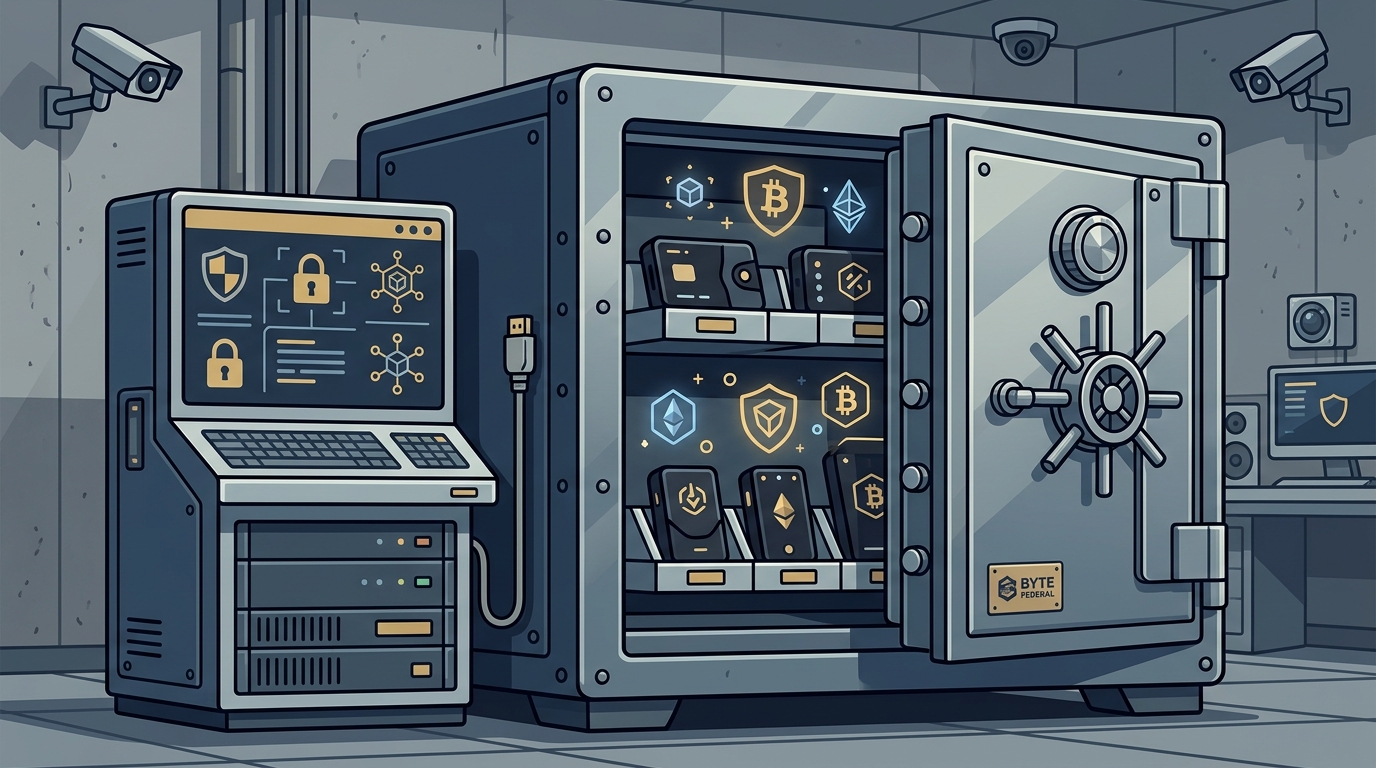
For users who prefer not to manage hardware themselves, Byte Federal Vault services provide institutional-grade custody. This service is ideal for high-net-worth individuals and businesses that require maximum security without the technical burden of self-custody. Additionally, Byte Federal's APIs allow developers to integrate secure crypto transactions into their own applications, ensuring that digital assets are handled with enterprise-grade security protocols.
Furthermore, Byte Federal's crypto wallet solutions offer a seamless experience for users who want to manage their assets digitally while still maintaining control over their private keys. This hybrid approach ensures that users can enjoy the convenience of digital finance without compromising on security.
Key Takeaways
- Cold storage keeps private keys offline, eliminating remote hacking risks.
- Hardware wallets are the most popular and user-friendly cold storage solution.
- Seed phrases are the ultimate backup for any crypto wallet and must be stored securely.
- Metal seed plates offer superior durability compared to paper backups.
- Byte Federal provides both self-custody tools and institutional vault services.
- Always purchase hardware wallets directly from the manufacturer to avoid tampering.
- Regularly update your wallet firmware to protect against known vulnerabilities.
Frequently Asked Questions
Is cold storage completely secure?
Cold storage is the most secure method for storing cryptocurrency because it is offline. However, physical security is still required. You must protect your device or seed phrase from theft, fire, and water damage.
What happens if I lose my hardware wallet?
If you lose your hardware wallet, you can recover your funds using your 12 or 24-word seed phrase. As long as you have this phrase written down securely, you can restore your wallet on a new device.
Can I use a Bitcoin ATM for cold storage?
No, Bitcoin ATMs are designed for buying and selling crypto, not long-term storage. However, you can use an ATM to purchase Bitcoin and then transfer it to a cold storage device like a hardware wallet.
What is the difference between a hot wallet and a cold wallet?
A hot wallet is connected to the internet and is used for frequent transactions. A cold wallet is offline and is used for long-term storage. Hot wallets are more convenient but less secure than cold wallets.
How much does it cost to store crypto offline?
The cost varies depending on the method. Hardware wallets typically cost between $50 and $200. Paper wallets are free, while metal seed plates cost around $20 to $100. Vault services may charge subscription fees.
Is it safe to store seed phrases digitally?
No, storing seed phrases digitally is extremely dangerous. Any digital file can be hacked, leaked, or corrupted. Always store your seed phrase on physical media like paper or metal.
What is Byte Federal's role in crypto security?
Byte Federal provides a range of services including Bitcoin ATMs, POS systems, and vault services. They help users access and manage their crypto assets securely while also offering infrastructure for businesses.
Secure Your Assets Today
Protecting your digital wealth is not optional; it is essential. Whether you choose to invest in a hardware wallet, use a metal seed plate, or utilize Byte Federal Vault services, the key is to take action now. Visit Byte Federal to explore our full range of secure crypto solutions and start your journey toward financial sovereignty.