

Bitcoin ATM fees typically range from 3% to 10% of the transaction amount, depending on the operator, location, and transaction size. This guide breaks down the three main cost components: the exchange rate spread, the service fee, and the network fee. We will explain how to calculate the total cost, compare different fee structures, and provide strategies to minimize your expenses when using a BTC machine.
Bitcoin ATM Fees: The Big Picture
When you use a Bitcoin ATM, also known as a BTC machine, you are not just paying the market price of the asset. You are paying a premium for the convenience of using physical cash. This premium is composed of several distinct fees that operators must disclose before you complete a transaction. Understanding these fees is critical because they can significantly impact the amount of Bitcoin you receive for your cash.
Unlike online exchanges that often charge a flat trading fee, Bitcoin ATMs operate on a different economic model. They must cover the costs of hardware maintenance, cash logistics, and regulatory compliance. These operational costs are passed on to the user through the fee structure. The total fee is usually displayed on the screen before you insert your cash, ensuring transparency. However, the way these fees are calculated can vary between different providers.
For users of the Byte Federal Bitcoin ATM network, the fee structure is designed to be clear and predictable. The network operates thousands of kiosks across the United States, and the fees are displayed in real-time on the kiosk interface. This allows you to compare the cost of your transaction against other methods of purchasing cryptocurrency. By understanding the components of the fee, you can make an informed decision about whether a Bitcoin ATM is the right tool for your specific needs.
Fee Components: Spread, Service, and Network
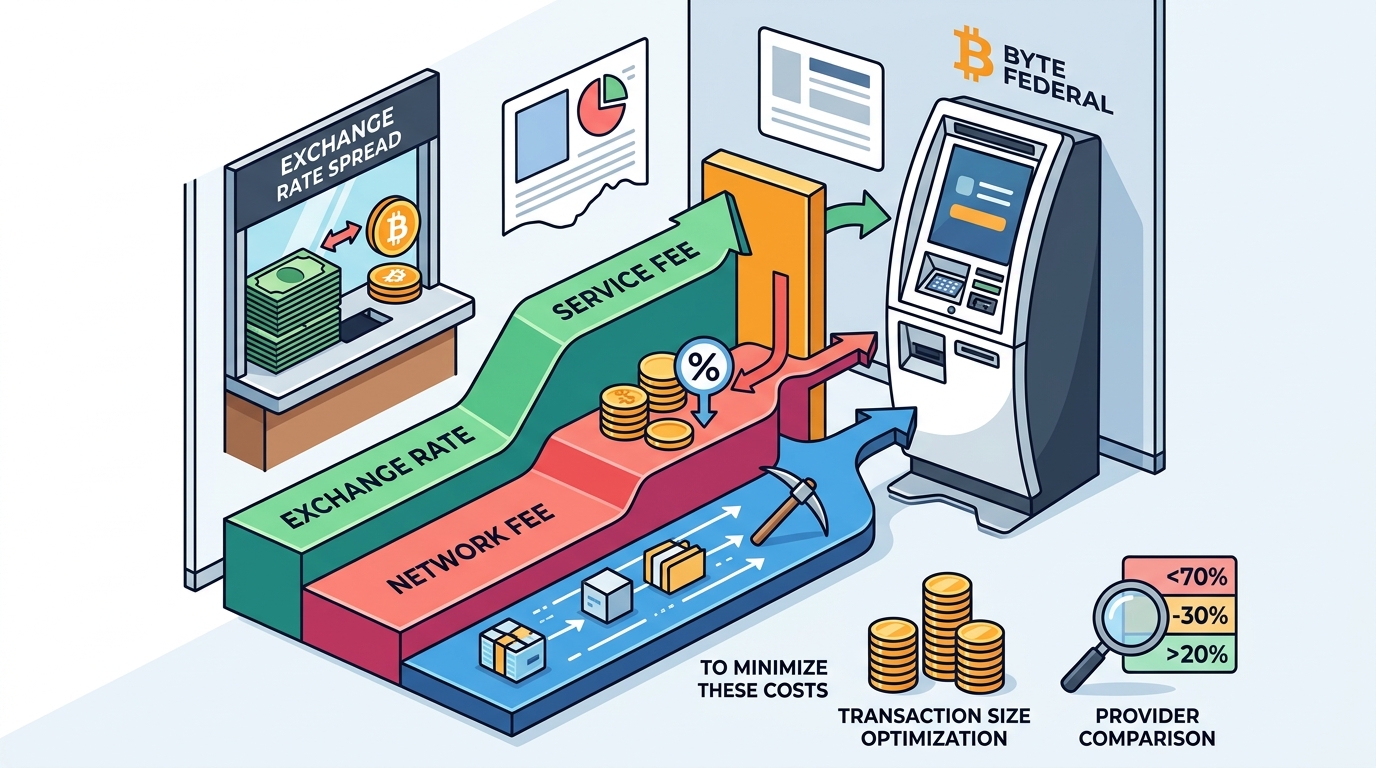
Bitcoin ATM fees are generally broken down into three primary components: the exchange rate spread, the service fee, and the network fee. Each of these serves a different purpose and is calculated differently. Understanding the distinction between these three is the key to mastering the cost of buying Bitcoin at a kiosk.
The Exchange Rate Spread
The Service Fee
The Network Fee
The network fee, also known as the gas fee or mining fee, is the cost of processing the transaction on the Bitcoin blockchain. This fee is paid to the miners who validate and add your transaction to the ledger. The network fee is not controlled by the ATM operator; it is determined by the current congestion of the Bitcoin network. During periods of high demand, network fees can be higher. However, for most Bitcoin ATM transactions, the network fee is relatively small compared to the spread and service fee. The operator may pass this cost on to you or absorb it as part of their service fee.
How to Calculate Your Total Cost
To determine the exact cost of your Bitcoin ATM transaction, you need to add up all three fee components. The total cost is the sum of the exchange rate spread, the service fee, and the network fee. This total is then added to the base market price of Bitcoin. By calculating the total cost, you can determine the effective price you are paying per Bitcoin. This allows you to compare the cost of buying at an ATM versus buying on an online exchange.
It is also important to consider the limits of the ATM. Some machines have daily or monthly purchase limits. If you exceed these limits, you may be required to complete additional identity verification steps, which can sometimes affect the fee structure. For instance, higher-tier verification may allow for larger transactions but might come with slightly different fee rates. The Byte Federal ATM locator provides information on the specific limits and fees for each machine in the network, helping you plan your transaction in advance.
Strategies to Minimize Your Fees
While Bitcoin ATM fees are generally higher than online exchange fees, there are several strategies you can use to minimize your costs. The most effective strategy is to time your transactions. Network fees fluctuate based on blockchain congestion. By monitoring network conditions, you can choose to make your transaction during periods of low congestion, when network fees are lower. This can save you a few dollars on each transaction, which adds up over time.
Another strategy is to use a wallet that supports the Lightning Network. The Lightning Network is a second-layer protocol that allows for faster and cheaper Bitcoin transactions. If the ATM supports Lightning payments, you can often avoid the higher on-chain network fees. The ByteWallet and ByteVault both support the Lightning Network, allowing you to receive your Bitcoin instantly and at a lower cost. By using a compatible wallet, you can reduce the network fee component of your total cost.
Finally, consider the size of your transaction. Some ATMs offer lower fee percentages for larger transactions. If you are planning to buy a significant amount of Bitcoin, it may be worth checking if the ATM has a tiered fee structure. Larger transactions often have a lower effective fee percentage, making them more cost-efficient. However, always be mindful of the purchase limits and ensure that you are comfortable with the amount you are investing. For those looking to learn more about the technical aspects of Bitcoin and how to optimize their transactions, the ByteU educational platform offers free courses on Bitcoin fundamentals and advanced topics.
Key Takeaways
- Bitcoin ATM fees typically range from 3% to 10% of the transaction amount.
- The total fee is composed of three components: the exchange rate spread, the service fee, and the network fee.
- The exchange rate spread is usually the largest component of the total fee.
- The service fee covers the operational costs of the physical kiosk.
- The network fee is determined by blockchain congestion and is not controlled by the ATM operator.
- You can minimize your fees by timing your transactions during periods of low network congestion.
- Using a wallet that supports the Lightning Network can reduce network fees.
- Always check the fee breakdown on the ATM screen before completing your transaction.
Frequently Asked Questions
What is the average fee for a Bitcoin ATM?
The average fee for a Bitcoin ATM is between 5% and 8%. However, this can vary depending on the operator, location, and transaction size. Some ATMs may charge as little as 3%, while others may charge up to 10% or more.
How is the exchange rate spread calculated?
The exchange rate spread is calculated as the difference between the market price of Bitcoin and the price charged by the ATM. It is usually expressed as a percentage of the transaction amount. For example, a 5% spread means you are paying 5% more than the market price.
What is the difference between a service fee and a network fee?
The service fee is charged by the ATM operator for the use of the machine and covers operational costs. The network fee is charged by the Bitcoin network for processing the transaction and is paid to miners. The service fee is controlled by the operator, while the network fee is determined by blockchain congestion.
Can I see the fees before I buy Bitcoin?
Yes, all reputable Bitcoin ATMs, including those in the Byte Federal network, display the fee breakdown on the screen before you insert your cash. This allows you to see the exact cost of your transaction before you commit to it.
Do Bitcoin ATM fees change over time?
Yes, Bitcoin ATM fees can change over time. The exchange rate spread may fluctuate based on market conditions, and the network fee changes based on blockchain congestion. It is always a good idea to check the current fees on the ATM screen before making a transaction.
Are Bitcoin ATM fees higher than online exchange fees?
Yes, Bitcoin ATM fees are generally higher than online exchange fees. Online exchanges often charge a flat trading fee of 0.1% to 0.5%, while Bitcoin ATMs charge a premium for the convenience of using cash. However, Bitcoin ATMs offer the advantage of not requiring a bank account or identity verification for small transactions.
How can I find a Bitcoin ATM with low fees?
You can use an ATM locator tool, such as the one provided by Byte Federal, to find nearby machines and compare their fees. Some locators allow you to filter by fee percentage, helping you identify the most cost-effective options in your area.
Does the size of my transaction affect the fee?
Yes, the size of your transaction can affect the fee. Some ATMs offer lower fee percentages for larger transactions. Additionally, larger transactions may require additional identity verification, which can sometimes impact the fee structure. Always check the specific fee schedule for the ATM you are using.
Conclusion
Understanding Bitcoin ATM fees is essential for any user looking to purchase cryptocurrency with cash. By breaking down the total cost into its three components, the exchange rate spread, the service fee, and the network fee, you can make informed decisions about your transactions. While Bitcoin ATM fees are generally higher than online exchange fees, they offer the unique advantage of convenience and accessibility. By using strategies such as timing your transactions and using Lightning-compatible wallets, you can minimize your costs and get the most value from your Bitcoin ATM purchases. For a reliable and transparent fee structure, consider using the Byte Federal Bitcoin ATM network, which provides clear fee disclosures and a wide range of locations across the United States.